Monday, April 3, 2017

My #17NTC Notes (spoiler- it rocked!)

Another year, another amazing NTEN NTC! It came and went so fast! It was one of my favorites because I took more time to spend with some of my favorite Nonprofit Techies!

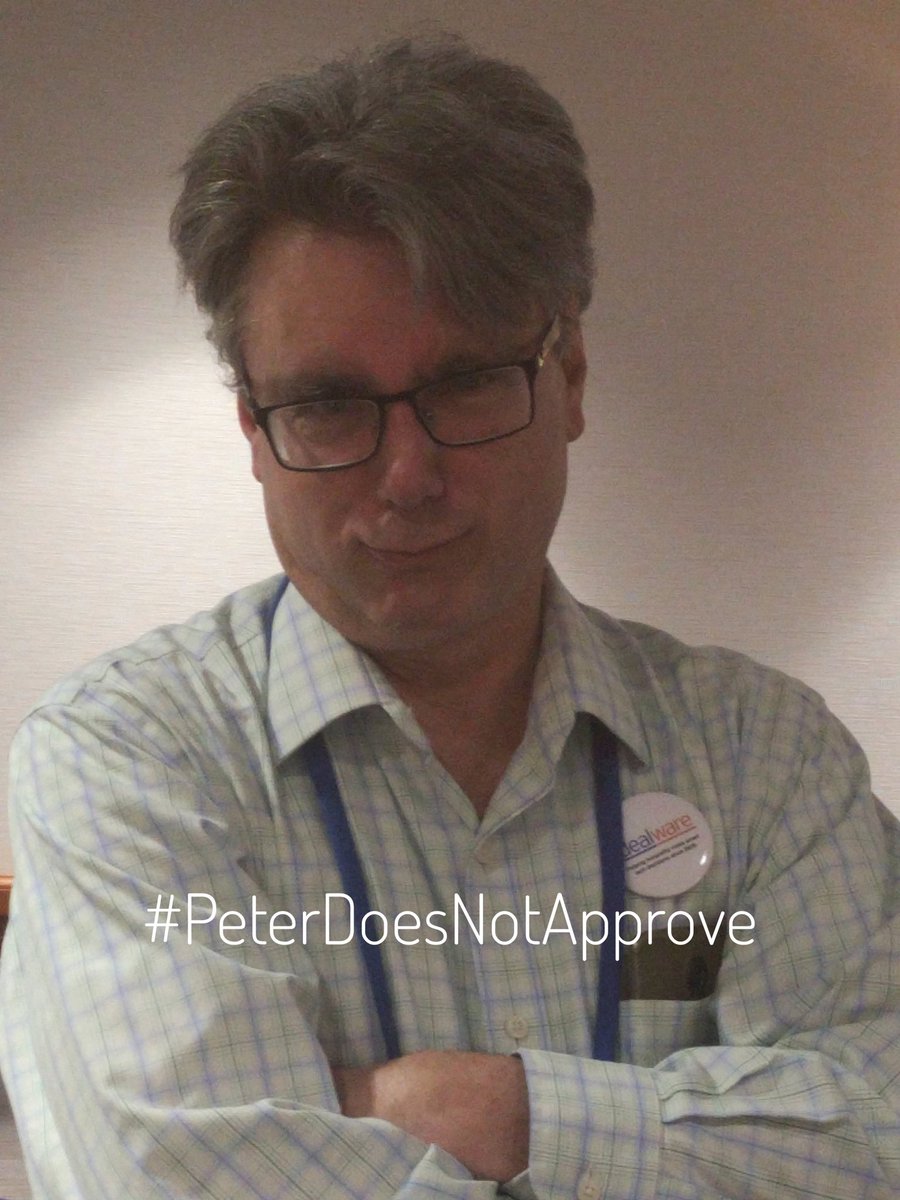
Each year I follow in the inspiring example of Peter S. Campbell by sharing what I learned at the NTEN Nonprofit Technology Conference. Be sure to read Peter's Post. And here is the Peter meme we tried to start this year.

But to start, here are a few awesome overheard quotes:
  • "I'd love to play with your API."
  • "if your exec director loves your website, you did something wrong."
  •  "if all of your file names end with "file really really final-final version.xls" you probably need better document management"
  • don't be ashamed to say you don't know how to use a tool or do something, we have all been there. 

Weds, March 22

#NTCBeer!
 #17NTC #NTCBEER was awesome!  Started with dinner with some long time friends and continued with some awesome brews and conversation making for a great night. This is a can't miss event if you come to the conference.

Thurs, March 23

Ignite Plenary!
There were less Ignites at the plenaries this time. A few were great, a few seemed like commercials.  Here are a few highlights.
  • starts with fail story of pricing change from vendor. Yikes! Tip know what you need & make it sustainable
  • so many fail stories start with learning "that has been done" but we decide to recreate it anyway, cuz we are unique
  • know your strength & value, don't fear collaboration & good software takes a team (not just cute boyfriend)
  • I feel like Clay Aiken, always coming in 2nd place.
  • fail story about ridiculous 7 stage, multi hour, meal eating & chart quiz. Ehhh wrong answer, security will escort u out
  • we all need bad experiences to show us what we really want & where we should be. Learn from failure.
  • how we react to failure is often more important than trying to avoid it.

Real World Business Analytics in Action
Live BI demo using Tweets
Many nonprofits struggle with communicating data. Some jump to visualizations without considering their goals or audience needs. Some have a clear idea of whom they are trying to reach, but don’t know how to best tell their data stories. Here are a few thoughts:
  • sometimes you have to start with what you have for analytics, even if it is bad & in numerous places
  • tools like data warehouse &  BI rock but we can't get funding for it to prove it is worth it
  • often first 15 seconds of looking at dashboard is all it takes for people to determine if it has value to them
  • visuals on a dashboard matter, they tell stories &  create interest
    Live BI demo with worldbank.org data
  • predictive tries to guess future, prescriptive tries to control it
  • typically 5% create the reports, 95% use them. Today's BI allows direct report BI creation to end user
  • enjoyed the laughter when Microsoft presenter asked about using Bing... Have fun with who you are
  • www.WorldBank.org has free datasets available for your analytics
  • combining bubble size &  y axis &  x axis with allowing chart to change with time tells a real story (see image to right)
  • gone are the days where your only data source is your internal database. Think social &  so many others
  • cleaning the data before BI reporting can be tedious. get the right tool &  spend the time tho, it is worth it
Welcome to the Future: Mobile Wallets, Payments, and Philanthropy
With so many different payment methods, it can be cumbersome and confusing to think about which methods you should or can accept and how secure your donor data is through these methods.
  • when thinking about mobile payments, consider your end goal (donations, events, engagement) & hire the data will be available to you
  • consider what countries you will work in: payment methods, phone &  tools will be different
  • digital wallets can dramatically increase the speed off making a donation. You don't have to fill out the donor info
  • text to give donation typically $5-$10, stats show higher donation with mobile wallet. But you tend to get more new donors with text to pay.
  • do your research on the platforms your supporters use before you select your mobile payment strategy. Analytics from website can help to determine what the makeup of your current supports is
  • know how pictures will get cropped when shared, if your logo/message is only on the bottom it won't show when shared
  • you can now add donation functionality to your videos on YouTube & your Facebook page
  • I wonder if by spending our time on social media & mobile do we get tech distracted & miss talking to people...
  • find change agent, need tech capability, be nimble, get data-permissions, legal risk & manage expectations
  • before going crazy with mobile payments, start with a good website with solid online fundraising to learn what works
  • key is to capture donations at moment you have supporters interest & attention, time kills conversions

The Role of Technology in Managing the Operations of a Nonprofit
I co-presented this session with Peggy Duvette from NetSuite and Kelly Bleach from the American Foundation for the Blind.  It was a fun session with Legos and Jenga. Plus there was a lot of great content. Feel free to check out the preso slides and the shared notes: https://docs.google.com/document/d/13duIVZAk_u8iXAKSIUGvN3tQXsAUQfmfdvAhQ11_YOQ/edit

Fri, March 24

The Fully-Informed Approach to Calculating Return on Investment
How can one determine whether an investment is worthwhile? How can we align our spending more tightly with our objectives? What tools and strategies support the formation of reasonable assumptions on the likely return on investment?

Visit the Collaborative notes for this session with the slides!

Mostly went to this because Peter Campbell presented and I always make sure to make time in my schedule to heckle him, but he is super smart! And Peter did not disappoint, it was awesome.
  • Getting the right buy in is always key! (Love the humor-slides from @peterscampbell ! see images to right)
  • to really get ROI realized, you have to follow up & ensure solution gets implemented & used
  • when ROI is about staff- using a survey before/after change can be effective to show change
  • Measure ROI in $ when you can, but list all benefits you can't monetize to see if those benefits are worth cost
  • ROI is unique to your org= your staff skills, existing tools, expertise &  other are all factors in cost/benefit
  • always consider the staffing changes needed for ROI! Will it work for your existing staff & if not.... (changes in staff, positions or training will be required.)
  • EVERY technology decision is a business decision! Know the impact of those decisions!
  • we need to be good stewards of $. Do the ROI work & research on your decisions.
  • combining ROI (return on investment) & TCO (total cost of ownership) can be powerful info
  • often patterns of cost & trends can also inform your ROI (staff retention, system usage, # of workarounds)
  • ROI can depend on knowing difference between Output (we help them get a job) & Outcome (no longer in poverty)
  • assessments are great when used correctly. But self assessments only work if you know yourself & are honest about it.
  • sometimes assessments are more effective when questions are asked across org, not completed by just one person? Multiple perspectives really adds value

Leading in Uncertain Times
These are uncertain times in many ways, but one uncertainty many nonprofits can relate to is funding changes (which seem to be a big topic right now). Peter and Dahna did amazing navigating this discussion and leading the crowd to some energetic conversation.  I have never seen so many people like a session with three slides on layoffs.

Visit the Collaborative notes!
  • It seems that the only certainty today is uncertainty.  So how do we handle it? big hint-get ahead of the crisis
  • Never let a good crisis go to waste! @dahnag (love her & this thought)
  • during uncertain times, keep mission & strategic plan as compass. And don't wait for a crisis if you see it coming.
How leaders should communicate
  • Be Carefully responsive! Don't overreact. Listen. Pay Attention. Be aware. Support and show you care-understand
  • As a leader, set the tone. Communicate. Be direct, but sensitive. Have a clear message.
  • Leaders are trained to leave emotion at home. But uncertainty=ANXIETY! Be aware of this & be proactive on it.
  • Uncertain times (crises) can be awesome opportunities to start a different conversation with your funders.
  • Say to funders: "you have seen the uncertainty in the news, we appreciate your support, but we need to change." – use this as a way to ask for operations funding – not restricted or as a way to ask them for more.
  • during short term crisis don't let it Street you from your long term goals. Strategic plans are key, just adjust 
  • be honest but not create fear. find the balance of reality and hope.
  • if executives aren't transparent, the rumor mill will take over. Lead by being open, don't hide it.
  • leaders might think "talking about it creates panic", but reality is silence is often worse.
  • never forget about the role of the Board during uncertain times.
  • transparency is key in uncertain times, but don't feed rumor mill. APPROPRIATE level of candor &  tone
Have a plan. And the best time to plan for uncertain times is during stable times.
  • Hope isn't a strategy. Have a plan. Setting direction & being able to share it helps address uncertainty.
  • Brainstorm w/ key players at uncertain time on worst case scenario vs likely, then plan for it. assess risk
  • Having a conversation before you absolutely need to have that conversation goes a very long way. 
When uncertain time hit:
  • in uncertain times, don't hesitate to renegotiate with vendors, it is better than just losing you
  • avoid big risks in uncertain times, but great time for small experiments. necessity is mother of invention.
  • find other orgs in similar uncertain times so your leadership has a peer to talk-commiserate with
  • when majority of budget is staff, so in crisis layoffs can be necessary. Don't avoid the conversation internally
  • when dealing with layoffs, involve the right people. Make decisions on impact & position, not the people.

Sat, March 25

Nonprofit Execs Talk about Strategic Assessment
This interactive panel discussion featured nonprofit execs sharing how strategic assessments changed their organizations.

Visit the Collaborative Notes!
    My favorite thoughts
    • we aren't getting things done, so let's just work harder & longer! Yep, that will fix it. not.
    • our staff have been here a long time ="institutional knowledge"... Otherwise known as, "we are set in in our ways."
    • we've always done it that way & now we need a better system to keep doing it the same way. not.
    Reasons to do an assessment
    • how do you move from being band-aid applier to silo destroyer? A strategic assessment may help. 
    • often staff want to make real change but are so buried in what they do that they just can't change
    • we're getting by & things are fine, why change? That is actually the easiest time to improve, rather than after a crisis
    • we don't like assessments, just like we don't like looking in a mirror.
    • we all think we want an assessment, but we fear or don't want to face the results or make the hard changes
    During an assessment
    • a HUGE outcome of assessments is the conversation that happens during Discovery. Let's make our org GREAT AGAIN!
    • your staff wants to be heard & provide strategic input. An assessment gives them that chance.
    • a solid strategic assessment can take 2 weeks, 8 hours a day, to give each dept-staff time to talk=an investment
    • scale the time/scope of a strategic assessment to match your org size, culture, needs, etc. Not one size fits all
    • during an assessment, you will find things that you didn't even know your org or staff does.
    • an assessment is only as good as the changes & actions you take based on it.
    • staff can't think past what they do today. just saying think outside the box doesn't help. Lead them with questions.
    • Avoid having managers in room while staff provide their insight in an assessment, it will be more direct & honest
    After the assessment
    • if your system doesn't work the way you want, ask yourself should I change how I work?
    • assessment is done, review results w/team. What is important to change, can be changed & celebrate what you change
    • create a budget for change based on the assessment & set aside time to make the changes or just don't bother
    • NOT everything from an assessment has to go through your board, just make the operational changes needed.
    • Peeling back the layers of the onion to see how bad we actually smell... Reasons to do strategic assessment 
    • helps to take the time to have staff review the assessment report to verify it is what they meant.
    How to Automate Workflows to Become a Truly Data-Driven Organization
    We'll review the steps involved in moving an organization to full workflow automation, including technical steps and organizational buy-in. We'll also cover ways to ensure that automated workflows are accessible to individuals with different technical skills.

    Visit the Collaborative Notes!
    • why do we design new reports to match the spreadsheet we used to use but hated....?
    • automation isn't just about those massive efforts, think about those 10 minute tasks you do every week, they add up
    • know when to automate. A 10 minute task you do quarterly which would take a week to automate isn't best idea 
    • Automation can be (and often is!) hacky.  Might not be beautiful. Goal is to make it work for you.   
    • if process has alot of copy/paste or waiting to click next between steps, then it might be a good one to automate
    • let me repeat. See if you can use the systems you already have better, before just running out because you saw some new awesome tool
    • before you automate, document the process/flow (even just using post-its on the wall 
    • adding a map to a dashboard or report will always make people cheer, but who cares if it doesn't tell a story


    FUN!
    I got to go all Office Space with Peter Campbell and Dahna Goldstein!

    And had the wackiest, loudest and best conference dinner ever with Lindsay Bealko, Marc Baizman, Tim Lockie and Marisa!


    Thursday, February 16, 2017

    Getting back to the Soft Skills - Presentation Skills

    I count myself lucky to have landed in my job at NetSuite (now part of Oracle). I get to do some amazing work with nonprofits and spend some time thinking about how we can assist small nonprofits with their operations and financials. So awesome. But another great part is the resources available. I recently got to spend a couple days at a Soft Skills training and learned a bunch of things. So I thought I would take a bit of time to share a few things from this training and other things I have learned along the way that are relevant to anyone who needs to do a presentation.

    Get comfortable with the content

    Death by PowerPoint is no joke. If you don't know your content well enough to present it without reading a script or reading from the slides. If you know your content, it allows you to be natural in your presentation and have some fun with it. So practice it.

    Have a plan.

    Building your slide deck is not a plan in my experience.  All you are doing is planning what you are going to say and when. This would work great if your style is just to present the material and allow for questions, which for some scenarios is the only choice.  But I find it useful to create a training design, this allows me to think through the flow and objectives for each part, not just the content.

    Here is what I typically use, I create a sample in a Google Doc. Beth Kanter has a good post on learning design! (Beth is wicked smart and rocks at presenting, by the way)

    Pick your style for the presentation.

    I think the biggest mistakes I have made when presenting is trying to do it all in one session: tell a story, run a workshop, present, interactive exercises, humor, entertainment, high level learning, detailed deep dive, etc.  I think the ones which worked best were the simple ones. I picked one hook for my session and stuck with it all the way. One theme and one approach with a clear message. You can mix a couple of these styles in, but it has to make sense with the topic and flow. How many times have you been in a session and the group activity felt forced or the story seemed to be a stretch or they spent the whole time entertaining but you never seemed to get to the content?

    Techy or technical presentation?
    Peter Campbell has an awesome post on how to handle this!

    Practice
    Yeah, I think I already mentioned practice, but practice should be repeated. And this is even more key when you have a team or a panel. Don't just wing it, unless that is the style of your presentation. But if winging is the style, make that clear in the description. However, even with a wing it interview style session, you still have to plan the time by topic, questions you will ask, prep the panel and do a dry run of the flow. So yeah, I go back to my original statement, you have to practice.

    Random tips from the training I attended:

    Tell, Show, Tell
    Tell what you are going to show, Show it, Tell them what you showed.   Basically this goes to recency and primacy.  People remember what was repeated and what was said most recently.

    Rule of 3 
    Things told in chunks of 3 are easier to remember.  Read this article about it.

    Limbic and Stories
    There is a connection between memory and emotions (limbic system), stories are a great way to make this happen. Read this article as an example.  But there are many ways to bring emotion into your presentation, pick ones that match the plan and style you picked earlier, don't force it.

    Well anyway, that is all the time I have for this post.  There is so much more you can do, but thought I would share.

    Here is my list of links for you to read more:
    https://del.icio.us/sheye/presentations 

    Tuesday, February 7, 2017

    Where I'll be at #17NTC!

    Each year I follow in the inspiring example of Peter S. Campbell by sharing where I'll be at the NTEN Nonprofit Technology Conference and typically I link to his awesome post, but sadly Peter hasn't posted yet this year or I missed it. Peter posted his post, WOOHO, go read it now!


    The annual NTEN Nonprofit Technology Conference is something I look forward to all year long! This event has helped shape my career and the orgs I have worked for, plus it has impacted a number of orgs and staff I have collaborated or shared with. I love it. Anyway, here is where I will be at #17NTC.

    HELP! Previous years I made awesome plans to connect with people at Breakfast, Lunch and Dinner, but I don't have any of those plans yet, hit me on Twitter at @steveheye if you want to connect or leave a comment.

    Or you can read what I learned at #15NTC to see if it helps you want to go! - seems like I never posted a what I learned at #16NTC, weird.

    Weds, March 22

    #NTCBeer!
    A mix of nerds and brew, need we say more? Celebrate the 9th annual #ntcbeer, the pre-conference party known for good refreshments and better conversation. Catch up with nptech friends old and new over a few brews or whatever. This year will be a bit different, our Facebook page will list a few options for you to pick from to meet up for #17NTC #NTCBEER. There are just too many of us to easily organize one place. Check it out on Facebook and meet some new people!

    Thurs, March 23

    Ignite Plenary!
    Lucky for all of you, I am not singing this year.  But the brilliant Amy Sample Ward will be reading some of her poetry! (not sure which day ASW will read it, but in response to my challenge post she agreed to it.) It's a can't miss!


    Communicating Data for Action and Impact
    With my new role so focused on data and nonprofits, time to sharpen these skills. Good session description: Many nonprofits struggle with communicating data. Some jump to visualizations without considering their goals or audience needs. Some have a clear idea of whom they are trying to reach, but don’t know how to best tell their data stories. This interactive session will provide real world examples and actionable advice on applying “The Five A’s of Data Communication” to help you achieve your desired outcomes:

    Technology Wellness in the Nonprofit Workplace
    You can't go wrong with Beth Kanter and I haven't been to one of her sessions in a while. I am sure she will have us doing some walking or maybe even mediation.... But hey she is wicked smart and always pleases the crowd. Plus we could all stand to put our phones down and learn to deal with the overwhelming amount of tech in our life.

    The Role of Technology in Managing the Operations of a Nonprofit
    I will be co-presenting this session with Peggy Duvette, plus a surprise nonprofit guest!  This should be a bit of fun mixed with some learning about tech and operations.  Come on we could all use some help with managing and running our orgs a little better.

    Fri, March 24

    The Fully-Informed Approach to Calculating Return on Investment
    How can one determine whether an investment is worthwhile? How can we align our spending more tightly with our objectives? What tools and strategies support the formation of reasonable assumptions on the likely return on investment? (Mostly going to this because Peter Campbell is presenting and I always make sure to make time in my schedule to heckle him, but he is super smart!)

    Audience Research on a Dime
    We're helping people solve for situations when they don't have resources for audience research, have buy-in for audience research, and understand the importance of audience research.

    FUN After Hours!
    Need to pick a progressive party!

    Sat, March 25

    Nonprofit Execs Talk about Strategic Assessment
    This interactive panel discussion will feature nonprofit execs sharing how strategic assessments changed their organizations.

    How to Automate Workflows to Become a Truly Data-Driven Organization
    We'll review the steps involved in moving an organization to full workflow automation, including technical steps and organizational buy-in. We'll also cover ways to ensure that automated workflows are accessible to individuals with different technical skills.

    FUN!
    Geek Games! Bring it!

    SO much Stuff! If you haven't registered, DO IT NOW! If you have registered, change your travel to be there early for the Pre-Conference (Smaller crowds and more info!)


    Monday, December 5, 2016

    Want greater control of tech in your org? Loosen your grip.

    Centralizing the planning of technology is crtiical to ensuring you have the right solutions for your full org.  Allowing each department or staff person to be involved in tech only leads to silos, disparate systems and inefficiencies.

    This seems logical right? Centralize the control to ensure technology is used well across the org.

    Times have changed though. Technology has been consumerized allowing everyone to be involved and is part of everyone's job. The cloud has made technology more approachable and accessible to all. The tools have also changed to require less IT management. The role of IT is shifting with this to focus on steering the technology plan, not controlling it.

    As this change is happening though, the tensions between departments seems to be growing as well, not to mention the silos. Each department gets their own solution, data isn't shared and people work in isolation.

    This gap is often evident between finance, fundraising and tech. Fundraising and finance each go out and get their own solutions, but end up looking at different data.  Cheryl Gipson describes this great in this article from NetSuite.

    Another example, back in 2013 this article by Richard Cooper you can see how the ease of adopting tools like email marketing, cloud CRM and social media has allowed Marketing to move forward with technology, without relying on IT. Of course this will lead to organizational challenges and IT does still have a role:
    The future role of the CIO is to set people free to exploit technology, but, and this is the big but, the role is also to educate people on the responsibility that comes with this.

    Or as  Michael Enos says in the article called The Future Role of the CIO in the NonProfit (also from 2013):
    ...the future role of the CIO is to ensure appropriate integration and alignment of all these exciting democratizing tools into the business strategy of the NPO. 
    So as times change, the role of technology, the IT team and the CIO has to change. It is no longer about control, but rather about influencing the alignment of technology across the organization. You need to loosen how technology is managed and who is involved to build collaboration across the org. The role of technology will continue to change, but the need for a technology decision maker to steer the technology direction across the org will not go away.

    Thoughts on this or good articles related to it? Please share them in the comments.

    Monday, November 28, 2016

    #17NTCIgnite - Take a Chance!

    First, I want to issue a challenge to the gloriously awesome Amy Sample Ward (ASW), CEO of NTEN. At the 2016 NTEN Nonprofit Technology Conference Amy Sample Ward shared a secret. I am not sure she meant to, but it happened.  She shared how she wrote poetry in her early years! Yep, we have a poet in our midst.

    Make #ASWPoems happen!
    So I am calling for Amy Sample Ward to share some of her poems on the main stage at #17NTC! So show your support and get busy on social media with  #ASWPoems at #17NC (feel free to tag Amy on Twitter - @amyrsward)  

    UPDATE ON #ASWPoems! Ok so Amy Sample Ward has already agreed to read some poems at #17NTC, WOOHOO! Can't wait to hear them! Here is her tweet.


    But back to the Ignite sessions. 
    For me I find Ignite presentations a way to push the boundaries and get out of my comfort zone. Facing fears like public speaking and trying things you have never done will help you grow as a person! Taking a risk, doing something new and pushing yourself can help in countless ways, especially if you fail along the way. Allowing the possibility of fear or even better, trying new things where failure is just part of the process of learning, can change you in many ways.

    I can't sing. But taking the risk of trying it out, practicing and then singing as part of my ignite in front of 2,000 people. And hey guess what, I still can't sing.  But hey, I had fun with it and it went pretty well. But more importantly it helped me embrace some big changes, roll with the unexpected, be OK with failure and most importantly never forget to have fun.

    So my second challenge to all of you, take a risk and try something new, maybe like doing an ignite at #17NTC learn more on the NTEN website!

    Visit the NTEN NTC website to sign up for an Ignite!

    Side Note: what is #17NTC and what is an ignite?
    Definition of Ignite from NTEN's site: Ignite is a roller coaster version of a keynote speech that combines education, entertainment, and a bit of sheer terror. Ignite talks give you the opportunity to share your knowledge with the nonprofit tech community from the largest stage at the 17NTC. There is a catch: presenters are strictly limited to five minutes and 20 slides, which automatically advance every 15 seconds. This isn’t a product demo—this is a chance to share your message.

    What is NTC? I look forward to the NTC every year. It is the Nonprofit Technology Conference hosted by NTEN. All types of nonprofit staff converge together around the topic of technology and nonprofits. And while the conference and agenda is great, it is really the people and community that make it great! You can read about what I learned on this post.

    Hope to see you at #17NTC on the Ignite stage!  Or at least tweet out the #AWSPoems #17NTC hashtag!

    Tuesday, October 25, 2016

    Volunteering to be in the spotlight? Or in it for the haul?

    What inspires you to volunteer for a cause or org you love?

    You want to make an impact, right? You want to make a difference, right?

    But when we seek out those opportunities do we look for what would help the org the most or do we look for the opportunities where it makes us feel like we helped? And do we just want to go in, do some quick volunteering and feel good? Or are willing to dig in, invest some time and get messy for a longer impact?

    Tutoring, serving food and coaching for youth sports are awesome ways to volunteer. This type of help is needed and appreciated. Many organizations have their whole service delivery built around volunteers. And  it works well! But this need will never go away, they will always need that next volunteer, so while the impact and need is obvious, the impact is short.

    The reality of many nonprofits today though centers on a struggle with their operations, tech and finance:
    • Overhead myth - pressure from Funders and donors to keep overhead low, pushing nonprofits to neglect their operations and infrastructure
    • Nonprofit Scarcity Cycle - Unrealistic Funder Expectations leads to Pressure On Nonprofits to Conform leading to Misleading Reporting And Overhead “Phobia” which confirms Funder expectations.
    • Rapid Tech Changes - digital content, cloud technologies, security/privacy, mobile apps, online fundraising, social media and so many more technologies creating opportunities for nonprofits, But many nonprofits lack the time, skills, resources, planning and strategy to leverage these tools and opportunities
    • Compliance - it seems like every time we turn around there is a new regulation or policy nonprofits have to comply with, whether it is financial reporting in the 990, HIPPA for Case Management, HR rules for staff, FASB changes in financial statements, PCI Compliance for credit cards and so on.
    • Data Transparency - Donors want to see what their donations do. Funders want impact reports. The public wants to know salaries, fundraising expenses and everything else. 
    But before I go too far with my rant on these topics, lets get back to why any of this even matters to volunteering.

    Are you willing to use your professional skills or expertise to have a lasting and deep impact on a nonprofit? 

    Are you willing to step out of the spotlight and into the Back Office to help nonprofit staff strengthen their operations and infrastructure?

    Yeah, helping in the Back Office is not as glorious and is not as directly tied to the mission or the cause, but help a nonprofit strengthen their infrastructure or operations can have a much more lasting impact.

    By volunteering with your skills and expertise to assist a nonprofit with their financial management, technology, HR, project management, data needs, marketing or other operations you can really help. Often nonprofit staff just need some coaching, someone to talk to or just ask a few questions.

    I currently volunteer for an org called The Cara Program in Chicago on their Tech Advisory Board and help in this way. (I have a post all about Advisory Boards) Serving on a board or a committee is a great way to provide your expertise.

    Nonprofits often need help with:

    • Project Management
    • Financial, Legal, HR Management
    • Data Analysis
    • Managing RFP processes
    • Process Improvement
    • Strategic and Operations Management
    • And more....
    If you don't have a current connection to a nonprofit, but still want to help, there are lots of great websites to help you find an org:
    This type of volunteering does require a different approach and commitment though.  If you start working with an org, you should be willing to take the time to follow through and get involved. Another key will be to make sure that whatever you do can be sustained by the org.

    And just a quick plug for how NetSuite.org and NetSuite goes out of their way to encourage all NetSuite staff to do pro bono work for nonprofits using NetSuite and giving 2 paid days off to volunteer for whatever nonprofit they want (doesn't have to use NetSuite).

    Now get out there and volunteer in the Back Office!

    Looking forward to more of you helping nonprofits scale, grow and make a difference.

    Oh, and I forgot to include a presentation I helped work on which talks about how to leverage skilled or technical volunteers.


    Tuesday, July 5, 2016

    The more NPTech changes, the more NPTech stays the same

    A few of my last posts have been about how things have changed and all of the differences.  But in the midst of all these changes and progress, it amazes me how so many things haven't changed at all. Back in the late 90s I was hired at to do Software Support because I had an understanding of fiannce and accounting with a knack for technology.  The real need wasn't a technical one, it was a business process and financial management one.

    Today it seems the same. We have better technology than yesterday, but I talk to so many nonprofits who understand technology is important but don't seem to know how to change their org to use it.  This was a big part of why YMCAs came together to help with the IT Alignment model.  We needed a way to express the types of changes needed as you mature how you use technology. You can read more about IT alignment on a special section of my blog.

    But understanding how to mature your use of technology was just a first step in this for me. But the next step was in this was how to think this trhough in terms of your technology plan.  So the next evolution was to focus on how it relates to your technology plan. Focusing on how to pull it all in to a strategic plan just didn't seem to work. If your tech is just starting out in Chaotic or Reactive a strategic plan is just too much. And at some point a strategic plan just doesn't seem to be enough.  This lead to a session called Tech Smackdown: Tactical, Strategic vs Mission Planning.

    But rather than tell you about it, here is a recording of a session I did on Tech Smackdown: Tactical, Strategic vs Mission Planning. This was recorded at the 2015 Legal Services Tech Conference.


    Monday, June 20, 2016

    What is up at NetSuite.org and what am I up to?

    Last summer an unexpected opportunity came my way, I wasn't looking for a new job. I didn't want to leave my job at The Cara Program, loved my job, the people and the mission.  But one thing I have learned through mistakes, is some opportunities are too good to pass up. It has taken me a year to write this post because the transition has been a big one.

    The Man

    Yep, a part of taking the new job seemed like I was giving in and working for the man.... NetSuite is a massive company compared to the nonprofits I was at and is like many tech companies with its culture (not saying good or bad, just way different than NPO). But there are more ways to have an impact on the world than to work for a nonprofit, I was ready for the change. And I will not deny that having the resources of a massive company changes things.

    Big Picture

    The mission was part of my everyday at The Cara Program, loved it! The mission was everywhere I looked and I could see the connection between what I was doing and the impact it had. A part of me always missed having a role on a more national or global scale helping many nonprofits, not just one though. When I was at the YMCA of the USA I was able to think about sector impact, not local impact. I loved taking massive, complex issues and breaking them apart into understandable and actionable parts (especially tech, operations & finance).

    Personal side

    Of course there were also some personal reasons too. My youngest child is going into High School, so I only have a few years left before they move on (hopefully...). And after almost 20 years of commuting 3 hours each day, working from home was appealing. The salary, perks and career track were very appealing as well. The ability to attend so many conferences and events over the last year has been amazing. Being home with my kids and wife has made an incredible difference.

    A Year Later

    So was I right? I do miss working at a nonprofit. I do miss the sense of belonging and values at The Cara Program. I don't miss the YMCA politics or leadership. But yes, this was the right decision.

    Over the last year I got to really dig in to my thoughts on the role finance and technology can have on how nonprofits work, manage their funds and meet their mission.

    • I want to fight to end the silos in orgs between finance, program and fundraising. 
    • I want to think about how you equip the small nonprofit with the same technology as the bigger ones in a way they can manage it and scale.
    • I want to fight the nonprofit starvation cycle and culture of scarcity, which is being pushed by funders and the overhead myth.
    • And so much more!
    These are the types of things I get to think about as part of my role. I don't have a direct impact on these large problems and I don't know how much of a change I have made over the last year, but as David Geilhufe says, "ask me in seven years".

    And speaking of David Geilhufe, here is the Nonprofit Keynote he did at NetSuite's SuiteWorld conference.  It is a perfect example of why I am on this team and love what I get to be a part of:

    Jumping back in

    Amidst all of the change over the last year, I have fallen away from my blog, twitter and so many other parts of the NPTech community. But I am ready to jump back in!

    My first NetSuite.org blog post (so many more to come, hopefully):

    And in case you missed it, my ignite session from the 2016 NTEN Nonprofit Tech Conference #16ntc (Big Thanks to Dahna Goldstein on the guitar!):

    Wednesday, February 24, 2016

    Where I'll be at #16NTC!

    Each year I follow in the inspiring example of Peter S. Campbell by sharing where I'll be at the NTEN Nonprofit Technology Conference and typically I link to his awesome post, but sadly Peter won't be joining us this year.  Please take a moment to wipe away your tears and think happy thoughts before continuing to read my post.

    The annual NTEN Nonprofit Technology Conference is something I look forward to all year long! This event has helped shape my career and the orgs I have worked for, plus it has impacted a number of orgs and staff I have collaborated or shared with. I love it. Anyway, here is where I will be at #16NTC.

    HELP! Previous years I made awesome plans to connect with people at Breakfast, Lunch and Dinner, but I don't have any of those plans yet, hit me on Twitter at @steveheye if you want to connect or leave a comment.

    Or you can read what I learned at #15NTC to see if it helps you want to go!

    Tues, March 22

    #NTCBeer!
    A mix of nerds and brew, need we say more? Celebrate the 8th annual #ntcbeer, the pre-conference party known for good refreshments and better conversation. Catch up with nptech friends old and new over a few brews or whatever. Visit us on Facebook!

    Weds, March 23

    Ignite Plenary!
    I will be back doing another Ignite session, but you will have to wait to see what it is!  Ignites rock the house with 20 slides, 15 seconds each and in 5 minutes you have a lasting memory! I embedded a video here if you want to relive the song part of my ignite from #14TNC.


    Too Many Metrics, Too Little Analysis: Creating Analytics Frameworks for Data-Driven Decision Making
    With my new role so focused on data and nonprofits, time to sharpen these skills. Good session description: Organizations everywhere sit atop a mountain of their own metrics, but few are effectively mining that data. Analytics can improve your understanding of your audience, but they can also help you to “know thyself.” A metric is only useful if you know who will use it and how it will help you shift tactics to keep your organization moving forward.

    Forget Big — It’s All about Small Data
    You don’t need to be an analytics whiz to dig into your organization’s data and produce impactful visuals and statistics. Learn how to measure program impact using free and low-cost tools that highlight accessible, small data. Small data is the human-countable data that many nonprofit organizations are already generating through service delivery and fundraising. Working through small data can help nonprofits get a handle on analysis, even for data newbies.

    Hour of Code: Hands-on Guide to Your First Computer Program
    Code curious? Not sure where to start? BYO computer to this friendly hands-on beginner workshop to get started in the world wide wonderful of coding. No experience needed!

    Thurs, March 24

    Leveraging Expert or Technical Volunteers!
    I am leading this session! Ever since I started volunteering at age 12 I have had deep respect for what is possible through volunteerism. This session will focus on how best to leverage Pro Bono volunteers but will cover a wide range of related topics. My colleague, Erin Dieterich, from NetSuite.org and Princessa Bourelly from Juma Ventures will be presenting with me! Strong team and great topic.

    Tell the Developers the Story!
    Too often, the story about why something is being built is not known by the development team. They may have been handed all the specifications, wireframes, mock ups, and prototypes needed to implement, but none of the larger context. During delivery, this can lead to lost productivity, misunderstandings, quality issues, budget overruns, and most important, technology that isn’t well-aligned with an organization’s mission.

    FUN After Hours!
    Need to pick a progressive party!

    Fri, March 25

    Automation: It’s Not Just for Marketing Anymore
    As nonprofit professionals, we’re often expected to do a lot with very little, which can leave us feeling overworked and overwhelmed. It doesn’t have to be that way! This tactical session will explore how free automation tools, such as IFTTT (If This Then That), Workato, and Zapier can be used to reduce monotony, boost productivity, and improve your organization’s internal and external communications.

    Data-Driven Storytelling
    In this lively session, we’ll explore the classic elements of a good story and how we can use these elements to make our data more approachable, understandable, relatable, and shareable.

    FUN!
    Geek Games! Bring it!

    And while I have moved on from my IT position, for you Tech staff thinking about NPTech, be sure to check these out:


    SO much Stuff! If you haven't registered, DO IT NOW! If you have registered, change your travel to be there early for the Pre-Conference (Smaller crowds and more info!)


    Wednesday, December 2, 2015

    Custom Software (Part 3): Custom Process vs Best Practice

    "Our needs are very unique, most systems won't work for us."
    "We have a complicated model and process, it is hard to explain."
    "We are too busy, we need to hire more staff to keep up."

    Yesteryear

    Back in the 1980's, I used my first operations software. We all knew who, or more correctly, what was in charge. The software dictated how we used it. When we wanted to decide the best way to do things, we look at the software manual or asked support how the software worked. Software was built based on the most common functions and best practices (or at least the best practices of the software company).

    We would all complain about how the software worked.  But the software choices were limited, so we didn't have much of a choice. Plus our use of the software was focused on record keeping. So when we wanted more from our technology, we had to go custom. Custom was the only other choice. If you wanted to do something different you had to build it yourself.

    Flash forward to today

    Technology has changed, as have our expectations. Today we expect flexibility with our technology, it should adapt to our unique needs easily. Don't give us a canned solution constrained to work the same way for everyone. Personalization. Customization. Consumerization. And any other ization you can think of which makes it all about me and how unique I am (or as unique our org is).

    Enter the cloud. Today platforms exist which give you the freedom to configure the software to match you process without customization. You simply make some choices on features, configure workflows, redesign screens, add fields and make it your own. Amazing capability, flexibility, adaptability and any other ility you want to add all with clicks not code by almost any user without IT help.

    But we haven't changed our process to select, implement or leverage these new tools.  We run our demos and selection process telling the vendor to only show us the "out of the box" functionality.  But when it is a platform configured to match your process, what does "out of the box" even mean? Whose box? Think outside the box. And the choice is no longer build or buy (you can rent and rearrange). Now your demos, selection and implementation processes rely on your understanding of your process, needs and capability. Comparing features won't cut it.

    Custom Process vs Best Practice

    In my new role I have heard more and more people ask how Best Practices are integrated, enforced or implemented in the technology. They want someone to tell them the best way to do a process based on their expertise in the solution and in their industry. So it seems like we have come full circle, lets get back to software with controls built around best practice? I have always, always, always hated the term best practice. I mean seriously, best for who? by who? in what scenario? ugh. I always preferred the term model practice, meaning here is a model that has worked for others.

    So let me get this straight. In yesteryear we complained that software was too limited by function. Today we complain that software needs to have more "out of the box" functionality. What? I think the real problem is a lack of understanding our own business process. period.

    Yesteryear's software dictated business process. Today's software allows you to configure to match your process. But are we ready for that responsibility?

    So what?

    So far this post seems to be a way for Steve to get on a soap box, relive his history and just generally rant.  Well it is my blog.... (insert smiley emoticon or something)

    But seriously. I think this conversation focuses on the software too much. At some point a nonprofit has to take responsibility balancing wanting more flexibility in software with their own ability to define their process and ability to act on it.  It all comes down to knowing who you are as an organization,  how you work and your capacity. The technology is not the problem, nor should it be the focus.

    The more flexible a software is the more you will need to know your process and the more tech skills it will require. The more "out of the box" functionality the more the software will dictate your process and lessen your need for internal tech skills. Way over generalized and inaccurate in a number of scenarios, but you get the idea.  And I am not saying one is better than the other.  There are countless examples where the "out of the box" solution is the best choice.

    Where I Would Start

    Define you processes. Not enough nonprofits take time to document and define their processes.  And if you don't have time or capacity to do this, stick with solutions with pre-built model practices. If you can't define your process, flexible software will exaggerate the lack of definition, so just don't do it. I don't mean to imply that lacking the time and capacity is a bad thing, it is just important to acknowledge where you are.

    Then before you choose software, take time to understand the type of solution best fits your org's skills, needs and capacity, then do a first selection round on match. Then when you do the second round, tell the vendors your biggest struggles, what you hope to accomplish with the solution and what success looks like.  Then ask them to demonstrate how they would address it, rather than feature comparison.

     This post is a part of a series of posts, to get more context read the first post.

    Wednesday, September 30, 2015

    Custom Software (Part 2): Custom Software = Custom Problems

    INTRO- This post is the second of three about custom software. You can read the opening post here.

    Custom software is built to meet your exact needs! How can you go wrong?!?

    But before I go too far, I do want to say there is a right time for custom software, but with new choices available today I think those times are minimal.  To help you think through if custom software is right, I would read this post on when to build your own solution. I would also like to add that when I talk about custom software in this post, I am talking about true software development from scratch, not configuring or personalizing an existing platform. Anyway....

    Question #1 - who will support it when it breaks?

    If you build something no one else has, who will you ask for help? It is like buying a custom built car that runs on garbage and flies, then expecting any mechanic to fix it. How will they know what parts to use? You will either need to hunt down the person that built it, good luck finding them McFly. Or you will need to find someone who understands garbage powered flying cars and then let them take the time to learn how your car is setup... every time it needs repairs, not to mention improvements.

    A custom software will have custom problems no one has seen before. There won't be a user group to turn to, documentation on how other's solved it or FAQs. You will be the first to ask.

    Question #2 - how will you keep it fresh?

    How many movies start with someone finding an ancient, super powerful technology, but no one knows how it works? Often custom software is awesome when it is launched.  But then process changes, technology changes, users change, leadership changes and time passes. No one remembers why it was built the way it was, no one remembers what the key development decisions were or what the purpose was. So a new team comes in, finds the custom software and looks at it like the apes in 2000 a Space Odyssey.

    Question #3 - who will support the users?

    If you build custom software, there should be a plan to have experts on hand to support it, plus a back up plan if that expert resource disappears.  Because people who like to build new, cool software are typically not the same people who like to stick around to help users. They will often move on to the next cool project. So you will need a couple types of experts, people to fix it, expand it, support it, document it, train users, support users, etc.... You might get lucky to find the one person that can do it all, but we all know where that ends in burnout (not to mention what happens when you replace the custom software).

    Question #4 - how will you course correct?

    Custom software relies on someone understanding the processes to be built, data to be collected, problems to be solved, reporting needs, user needs and so much more.  There is bound to be something built, implemented and later found to not meet the intended purpose.  Often this is where work-arounds built with spreadsheets start to grow. But as this happens people rely on the data in the work-arounds more than the system because they control it and know how it works.

    So once the custom software is built but isn't working, you will have a new custom problem to address. Who is watching for these issues, does the analysis, creates the process map, designs the solution, implements it and then trains the staff (plus supports it).  These course corrections will not stop, things change and developers don't always get it right (especially if the original request wasn't clear).

    Custom software is built to meet your exact needs! How can you go wrong?!?

    Things will go wrong or change with software. With custom software is your custom problem. But hey, if you really are solving a new problem

    Addendum: Custom Software vs Configured Software
    I know this post seems very negative on Custom Software, which frankly it is (sorry if it was snarky). I will restate that I do think there are situations which demand innovation and outweigh the risks of custom software. But I would stress exploring new cloud platforms which allow configuration (click not code) to meet your needs, plus allow for code. This allows personalizing to meet your orgs needs, but keeps you in a sustainable environment. You will have flexibility within limits but still get updates, support, enhancements and be in a community. Today's solutions provide you the tools to customize many parts of the system as an administrator through wizards and user interfaces to make changes without code.

    Side thought...
    This post really could apply to custom websites or any custom code really.

    The next post will focus on Custom Process vs Best Practice.

    This post is a part of a series of posts, to get more context read the first post.

    Tuesday, September 15, 2015

    Custom Software (Part 1): Complicated or Complex?

    INTRO- This post is the first of three about custom software. You can read the opening post here.
    "Our needs are very unique, most systems won't work for us."
    "We have a complicated model and process, it is hard to explain."
    If you have worked for a nonprofit, you have heard (and probably said) these statements. But before dig into what I think lies behind these statements, lets agree on my definitions of Complex versus Complicated.

    Complicated - difficult to analyze, understand, explain, etc. (from reference.com) I interpret this to mean the methods are not clear, defined or purposeful enough to be explained. 
    Complex - so complicated or intricate as to be hard to understand or deal with (from reference.com) I interpret this to mean there are many defined, intricate parts aligned to meet a need requiring multiple solutions to address.

    Not sure I have expressed my thoughts on the distinction clearly. Basically, I think we over complicate many things as nonprofits (and companies and personally, not unique to nonprofits).  We build our process over time, tailored to staff, tied to grant\funder requirements and to meet our immediate needs. We react. This creates complicated process. Difficult to explain, because it is cobbled together. Difficult to understand, because it was designed to meet a range of needs instead of focusing on the process. Difficult to analyze, because there is no purposeful pattern or outcome.

    Some things are simply complex. Solving big problems like homelessness, poverty, education, etc is complex. My last organization, The Cara Program, had a complex program model, not complicated.  The program to return people to work had a number of elements including admissions, transformation training, professional training, personal coaching, placement, retention and advancement. Each element was intricately designed to support the overall outcome of lasting change, but each element requires unique skills, steps, metrics and management.  Trying to explain the structure in general is easy for the staff, not complicated, because everyone gets how it all works together.  But if you tried to dig in and understand how The Cara Program operates, it is complex.

    Is the distinction more clear? (or at least my thoughts on the distinction-I know people will nit-pick this apart!)

    What does this have to do with Custom Software?

    All of this complicated process translates into a messy software selection process.  Often one of the things immediately cut or never even considered during software selection is process mapping. We jump straight to the needs assessment. We get everyone together and start listing out everything the software has to do, without even understanding why we do it or how it could be done differently. We do it now, so the software has to do it.  Therefore, our needs are complicated and none of the solutions out there will meet our needs. We must need custom software....   oy,

    I would ask yourself, if there are no solutions out there which do it exactly how you do it, are you doing it wrong? Do you need to keep doing it that way? If you changed, would your outcomes change? There are times when innovation and custom software is required, but those times are limited especially with the new platforms available today.

    What I would suggest you do before simply stating your needs are complicated.
    Documenting your processes before selecting new software gives you a chance to figure out how you work. But it also gives you a chance to ask why and to look for what is important versus what can change.  It is easier to simplify a process when you understand it, along with how it all works together.

    Understanding your process and goals helps you understand what you should simplify and what is necessitates complexity can help avoid complications. This is not about software, it is about finding the most effective way to meet your mission.

    The next post will focus on Custom Software = Custom Problems.

    This post is a part of a series of posts, to get more context read the first post.

    Monday, August 24, 2015

    Custom Software! We are so unique and complicated!

    I can't count the number of times I have heard nonprofits say:
    "Our needs are very unique, most systems won't work for us."
    "We have a complicated model and process, it is hard to explain."
    "We have limited tech experience, so we just do it all in Excel."
    "We are too busy, we need to hire more staff to keep up."
    There seems to be this peer pressure to brag about how unique a nonprofit's needs are. (This isn't any different than everyone bragging about how over busy they, like that is a good thing.) You aren't cool unless you are complicated. I don't get it. I know the problems nonprofits are trying to solve are massive and messy. Funders and donors exaggerate this on occasion by favoring those with a new approach, all while requiring unique reports and often not funding technology. The problems nonprofits have are real, but are we taking the time to rethink how we work to match the opportunities technology brings

    Over the next few posts I will cover some of my thoughts on complicated process combined with custom solutions.
    1. Complicated vs Complex
    2. Custom Software = Custom Problems
    3. Custom Process vs Best Practice
    These ideas have been growing and changing in my head for years, but my new job has finally brought it all full circle. I finally have some close to complete thoughts on this. Which is good because some of these things have been driving me crazy for years.

    Monday, August 3, 2015

    Standalone Technology Strategy Is Dead. Long Live Stand Alone Tech Strategy

    Every now and then I read something which sends me in a time machine chuckle.  I think to myself, "Self, haven't you read this already, like 20 years ago?"

    "The days of building a standalone technology strategy are over."
    This is the final line in a post on Outsource Magazine.  The idea is some orgs have moved all of their tech to the cloud, so there are no systems in house requiring tech support. SO hey, we don't need no stinking standalone tech strategy. Let's just completely integrate our tech plan into other areas.  It'll be great, THEY say. Everyone will help drive tech strategy and it will rock, THEY say.

    I say get over it. The need for a standalone tech strategy still exists even if all of the systems are in the cloud.
    If you have more than one system, who will think about integration?
    If you have devices to access the cloud, who will think about those?
    If you have staff using the technology, who will think about support and training?
    If you want to re-engineer processes, who will do the mapping, solution planning, etc?
    If you have new features released, who will think about how to use them?

    I could go on and on. Not to mention, the need for someone to step back and have a vision for technology across the org.

    Let's jump back to 1993. This model about Strategic Alignment from Venkatraman summarizes things for me.  We will always need technology thinking to happen from four different perspectives.

    You can read about the model, but in essence it shows a need for technology strategy to:
    1. Start with Business Strategy, drive process, end with tech implementation 
    2. Start with Business Strategy, involves IT in definition, end with tech implementation
    3. Start with IT Strategy, suggest Business Strategy change, end with change process
    4. Start with IT Strategy, implement tech, end with change process

    There are real needs for each of these types of strategy and without a standalone tech strategy to harness, drive and push these, how well do you think things will end? I picture a skyline consisting of a city of half built buildings without a tech strategy.  As long as you are in the middle of the city with your eyes down, getting the daily work done, you never notice the buildings don't get finished. But someone stepping back to view the horizon can see it clearly.

    Tuesday, July 28, 2015

    16NTC and a new respect for the back office

    My introduction to technology as a career was as a Finance Director at a local YMCA back in the 1990's. During those days it typically fell on the Finance or Accounting staff to manage technology  (actually it is still true for some today).

    My initial interactions with technology in the Finance role highlighted the ability to transform operations, streamline process and automate manual procedures. This was before the consumerization  of tech with gadgets and before the onslaught of Social Media.  We knew technology could help our org run better.  But I wonder if we take it for granted now and ignore the new capabilities technology has to transform how we work.

    As I have begun my new role at NetSuite on the Social Impact team, we have been taking time to think through the capacity of our Grantees to use a solution like NetSuite.  This really got me thinking, when was the last time I saw a session at NTEN focused on finance\operations and technology at NTC? But then I wondered, would anyone even go, they are not nearly as exciting as the scads of crowdsourcing and social media sessions?

    So I have been resisting the urge to promote the sessions I suggested, hoping the inherit value would garnish votes, but alas here is my attempt at suggesting we pay attention to the back office.  So please take a moment (if you agree) to vote for these sessions.

    Don’t ignore the back office
    http://16ntc.ideascale.com/a/dtd/Looking-to-Scale-Don-t-Ignore-the-Back-Office/119489-35237

    IT Alignment:

    Leveraging Expert or Technical Volunteers

    Process Map to Business Requirement


    I hope to see all of you at 16NTC!

    Monday, May 11, 2015

    New Adventures for Steve Heye!

    The Steve Heye you know today is not the same as the Steve Heye from years past. I owe my revival of passion, motivation and tech skills to The Cara Program. I have never worked with such an inspiring, innovative, genuine and dedicated group of people. If you have never heard of The Cara Program, You NEED to visit them here in Chicago, simply amazing org. (www.thecaraprogram.org)

    The Steve of the early 2000's was jaded and had a sort of lack luster passion. I was at an org I had dedicated my career to, and they laid me off twice. At times during these years my involvement in the #NPTech community was restricted by my job, I was not able to contribute the way I wanted to. But the leadership at The Cara Program embraced my love for and engagement in the #NPTech community. This allowed me to write blog posts, present webinars, speak at six different conferences in a year, contribute to an encyclopedia, and so much more, which I love because I got to share what I learned back to the community!

    While at The Cara Program I got to be a part of challenging and rewarding work led by an innovative, visionary CEO, Maria Kim. The Cara Program is impact and metrics driven so technology was a critical element in the strategic plan. With the help of the unstoppable skills of Andrea Cote we made magic happen by changing process and implementing solutions which was eagerly adopted by staff and the org. So much fun! My job was so much easier with the support of my boss, the CFO, Carla Denison-Bickett. Carla helped me refine my approach to fit the culture of Cara, which I needed help with because it was very different than I was used to. There are countless other staff I could thank, like Erwin Delfin for keeping the actual tech running, but this post would get out of control quickly.

    I also found a rejuvenation of mission driven passion at The Cara Program. I have never felt so close to the impact on the people we serve. In nonprofit technology we can often feel removed from impact and mission, but not at The Cara Program. I was able to be a part of the magic on a regular basis! I have never been the one to share "emotions" or go out of my way to affirm colleagues, but now I just can't help myself. Just like the Grinch, my heart has grown three sizes, but luckily did not explode out of my chest.

    But it is time for a change, as of June 2015, I will be joining a new team at NetSuite! I will be joining the NetSuite Social Impact team as a Solutions Consultant! My role will be focused on working with small to mid size nonprofits interested in getting the NetSuite solution donated to them! NetSuite provides a core set of their technology free to nonprofits under $5 Million in budget and I get to help giving it away! Booyah. But not only will I get to be a part of helping nonprofits and giving them technology, I will also be a part of a team creating a model to ensure the nonprofits are successful in their adoption of the solution! Double Booyah.

    NetSuite is a great fit for me because of its strength as an ERP, getting me back to my Finance days (my Finance degree). The opportunity will leverage my experience in software development, implementation, planning, adoption, change management and so much more. Not to mention my long background in nonprofits and technology, long live #NPTech! Leaving The Cara Program is bittersweet. I will miss all (and I mean all) of the staff, such a wicked smart, fantastic team. But this new opportunity seems to be basically built for my seemingly random resume and experience.

    This is lucky for all of you though because my position at The Cara Program is open! Yes, you can take my job and join an amazing team, org and mission. The Manager of Technology position is posted on our Jobs Page, APPLY NOW or feel free to contact me about it as well.

    I am excited to begin my adventure with the NetSuite Social Impact team, I have already met a few of them and I can't wait to get started making a difference with them! But don't worry we will all still see each around the interwebs and since I will be working from home, I will still be around in Chicagoland!

    Wednesday, March 25, 2015

    Emerging Technology Decisions (Nonprofit Examples)

    This article was originally posted in Dimensions (a journalist publication from the National Catholic Development Conference). I redid a bit for a better read on a blog and threw in some pictures for fun.


    I have a few stores I enjoy shopping at, but those stores also seem to know exactly how to get me to buy things I don’t want or need.
    • The hardware store has amazing sales and rebates on items which drive me to spend more time in the store, buy things and return for more when I get the rebate. 
    • The big box warehouse I shop at encourages me to buy everything in bulk. So an impulse buy turns into 30 items I don’t need, instead of 1. 
    • Then there's my favorite gadget store, they have the coolest things I never knew existed and the kid in me just wants to buy them. 
    I think it is pretty easy to relate how we evaluate emerging technology to how we shop, which may result in efficient use of funds or unused technology. We need to have a purpose and framework to evaluate emerging technology.

    Emerging technology is the wrong thing to focus on. It is only a means to an end. The real end goal of emerging technology is to drive innovation. So it makes sense to follow the steps for Unleashing Innovation. Luckily MAP for nonprofits, Idealware and NTEN have created a great resource to walk you through Unleashing Innovation. I will refer to the steps they have outlined and would encourage you to go read the full report. But I want to use some examples of how to approach emerging technology with two nonprofits I have personal experience with.

    The steps from the Unleashing Innovation resource are:
    • Understand your Needs - Assess the things you could be doing better or differently 
    • Know what Technology is available - Take time to educate yourself about the technologies available (resources like Idealware and NTEN can help) 
    • Connecting the Needs - What is the catalyst or driver for exploring emerging technology 
    • Make the Change Happen - Get leadership support, staff buy-in and drive adoption 
    • What Success Looks Like - Define the planned outcomes and how you will measure it 

    First a quick overview of the two organizations:

    The Cara Program


    I am the Manager of Technology at The Cara Program. The Cara Program is a workforce development organization focused on homeless or nearly homeless. We help them get and keep a job. We use a series of transformations classes, internships at social enterprises and professional development to prepare our students. Then a team of staff work with employment partners to identify job opportunities and match students to ensure a right fit. This is followed by a team of staff to stick with the student throughout the first year of employment. The culture is one of innovation, data driven decisions, tolerance for risk and ongoing change.

    Leap of Faith Arts Ministries

    My wife is the Executive Director at Leap of Faith Arts Ministries, a nonprofit focused on using arts to worship, and I volunteer to help them with their technology. Leap of Faith:

    • Much smaller and has limited resources.
    • As a Faith based organization their culture is rooted in their beliefs and impacts all decisions. 
    • As a newer, smaller organization their tolerance of risk is less and they need to focus on building a stable base. 
    • Their staff consists of an Executive Director, Dance Director and instructors, this small team has to focus their efforts on running the program.

    These two orgs are different enough to illustrate how to approach emerging technology.

    The first step is to understand your needs. 

    The Cara Program
    Leap of Faith Arts Ministries
    • Stable technology infrastructure, strategic technology plans, formal business process management and sophisticated data analytics.
    • They have needs to improve their workflows, innovate programs, build sustainability and drive long term change.
    • The technology needs are more focused on operations and supporting a smaller staff with limited budget. 
    • They have needs around creating efficiency, enabling communication, increasing awareness and establishing a stable foundation. This is the best time to involve others from your organization to build buy in during adoption.

    This is no different than my example of the stores I enjoy. If I wander in to browse, without knowing what I need, I may leave with some cool stuff I will never use. Offering samples at the big box warehouse is no mistake, it purposely feeds on our impulses. Knowing what you need before you go to the store can help avoid the impulse buys. Now the exception may be if your need is to get new ideas, going to a store to browse and explore is a great idea.

    The second step of finding available technology can happen in a number of ways. As a volunteer I help Leap of Faith Arts Ministries know what technology is available to them. They also belong to an organization called More Than Great Dancing which allows them to learn from similar orgs about the technology they are using. At The Cara Program we have a technology team of three staff, each taking time to learn about their perspective areas, as well as leveraging a group of volunteers in a Technology Advisory Committee. This committee provides an outside perspective and additional insight into emerging technology.

    The trickier third step is connecting the technology to the need. It is easy to fall into the shiny object syndrome with emerging technology. You see an awesome technology and an opportunity, so you jump in and try it out. But having an opportunity is not the same as connecting to a need. Every organization needs to allow room for experimentation and pilots, however there should be a strategy behind it to avoid ending up with a collection of unconnected tools.

    The other danger with emerging technology not rooted in a real need is experiencing a hype cycle ending with an unused toy. The technology hype cycle from Gartner shows the excitement when it is new, which quickly declines then levels off when the tool meets a real need (often way below the peak it originally reached).


    I don’t buy too many things on a whim in bulk at the big box store. If I am going to try something new, I buy it in smaller quantity to try it out. And I know what my family typically likes, enjoys and needs before I go. Then I base my shopping on our budget, upcoming plans and what we already have. Much easier than trying to pick the right technology to meet the need and make sure it is useful.

    Making the change happen is the fourth and toughest part of this process, especially if you haven’t done your homework in the first few steps to include your organization. A key to this step is defining what success looks like before the technology gets implemented. At The Cara Program a key to our adoption has been tying it to documented business processes and needs, taking the time to understand how we will use it before we buy it has been very effective. We also try out technology in small pilots while steering mission critical technology to integrated technology. At Leap of Faith it has been important to make all technology as easy to use as possible since there is no tech support. All technology is tied directly to a function, while balancing the faith based culture and limited resources. The innovation is really driven by cost savings and efficiency.

    To close the loop (final step) you should compare the outcome to what you thought success would look like. Did the technology have the intended impact? Is the original need being met? Have things changed? Is the technology being used the intended way and is it sticking? This is a time to ask these questions.

    Innovation driven by emerging technology can be a powerful way to radically change the way a nonprofit meets its mission and changes the world. It provides new ways to do old things, new opportunities and new ways of thinking, but without context on how you will use them or how they are needed in your organization, they will just be shiny toys. The way you approach emerging technology needs to be unique to your organization, goals, culture and mission. Be sure to read the full Unleashing Innovation resource to learn more about this process, then make it happen!