Showing posts with label webdesign. Show all posts

Wednesday, February 11, 2009

5 ways to get staff wearing comfortable shoes (or using the web)

One of my first posts on this blog still gets some considerable traffic, 5 secret ways to trick your colleagues into becoming content creators for your website. So in that effort I am going back to another list of 5. This post was inspired by a comment from one of my readers (didnt even know I had any). Thanks Rebekah.

"I think easing them into using the intranet for communicating is a good way to start and I'm hoping it will work! We're thinking of starting an internal blog to introduce blogging and show them how easy and potentially useful it could be for us. Maybe my trickery will be as effective as yours." Rebekah

5 ways to get staff comfortable with using the web

One basic key is just like breaking in a new pair of shoes, wear them enough to get worn in but not too much to avoid blisters.
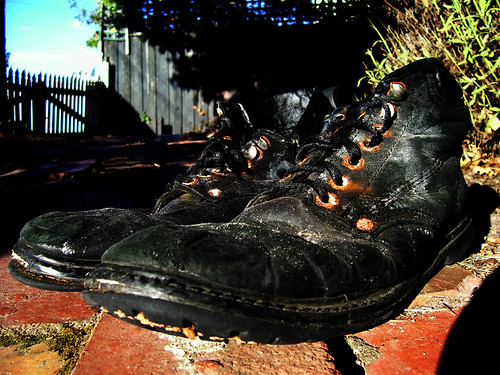
1. Start with your own shoes. As Rebekah says above, implement functionality and tools within your commited network of staff before launching to the public and expecting staff to understand and participate. So get a blog, tag cloud, RSS feed, photo sharing, discussion boards, comments, etc and get staff to try them in a safer staff environment.

2. Get some people showing off their kicks. Find some staff that are more excited than others and get them to try out some of your web tools. Build up some examples, stories and champions.

3. Look for the best fit. Dont just focus on those people that ar the most willing. Look for the groups that these tools will have the biggest bang or impact with an audience that is a natural fit for technology. For example, setting up a myspace page for groups that work with teens, have a swim team create a ning social network, Camps start a disscussion board for alumni, etc. Maybe dont start with a newer program where people dont know each other yet, program areas with wide topics like an aquatics social network (keep it focused), etc.

4. Leave some footprints yourself. Why even bother to try convincing others if you havent even tried the tools yourself?

5. Display the shoes. Before you make people try out the tools communicate several different times and ways that they are coming and post some demos or sand boxes for them to touch the tools or try them on. Here is a possible set of waves of communications, blast general announcement, run a webcast, run a training, have a colleague blast a story how they used it, send out an example of others using it, one on one conversations with key people, start the training all over, do another webcast, etc.....

6. Make it personal footwear. Dont focus on how the shoes were made or how they work. Make it fun and exciting, focus on what it means to the individual. Let the individual make the footwear their own, in their own time.

And yes, keeping with tradition, my list of five things includes 6.


Monday, January 26, 2009

YMCA web site, make it useful

My first plan of action with our web site was initially to jump in and fix two major things - the content and the "look and feel".  We have very little content that tells you who we are, what we do and whats makes us better than other alternatives (and yes we are better ;-)).  I had (and actually still do) this big plan for creating deeper content that describes our programs, services, philosophy and mission.   All of this would improve our organic search results, provide more information to members-prospects and would (in theory) increase traffic.

Then a revelation came as we talked through some things.  Why increase traffic when there is no real reason for people to come to our site?  Our online program registration is functional, but needs work.  We have an online donation page.  But beyond that, we dont have anything in place to make that increased traffic stay once they are on the site.  Our current members dont have much of a reason to visit the site.

So that is when our plan was rearranged a bit. We are working to create an innovative, meaningful set of online tools that will extend the services that the YMCA offers.  Our first step is to super size our online registration system.  We plan to make finding the class that is right for you much easier and even pointing out ones you didnt know we had.  We also plan to make the whole experience much more enjoyable and effecient.  We still plan to really beef up our content, but that will take a little time.  

So what is unique about that to merit a blog post? Nothing, but it is my blog so PLLTTHH. (is that the sound when you stick out your tongue?)

Just kidding.  This is worth posting and sharing because I wonder how many of us out there focus on spending so much time getting new traffic, recruiting new members, pushing SEO and such that we forget to make the experience meaningful to our audience.

Too many YMCAs are just OK with mediocre online registration and membership management tools.  Their web site is just there as a reproduction of their brochure and a cash register to accept payment for classes.  I am sure this is true with other orgs as well.  My thought is to offer a set of tools like no other YMCA that adds real value to our members.

Tuesday, January 20, 2009

Sidetrack from Web Strategy - Quick Wins


I am deep in the throws of pushing our web presence strategy forward when suddenly I turned around to see a bunch of things that I could do now to make an impact. It seems that we always have to fight for that balance between immediate and long term needs.  (wish I knew where that picture came from).

I had been working off of the idea that we need to put a bunch of things on hold in order to focus on the long term win.  I think many of us get through the day putting out today's fires and dont have time to think about the long term needs. But dont we really need both?

So I took a little time this week and got a couple small, quick wins for the team.  First we used Flickr to upload a couple photos of a Grand Opening of our new Kelly Hall location (very exciting to be serving a community that needs us so much!).

Within a short amount of time we were able to get this up and shared.  But with this came a number of struggles.  One of which was that we had a paid photographer at the event and hopefully they were able to get some great photos.  The struggle is that we are still waiting for those photos, we ended up using a few photos that a staff member took.  (notes for next time...)

Beyond adding that quick page about our launch we also took a step back and are working on content that could be easily added to our current site that will also be reused in future development.

Plus we realized that within the IT department we arent using our own online tools well enough.  We will be launching an intranet this year for the full association with plans to have some great social networking and collaboration integration.  But here is our own team that could use a little bit more of that.  I am by no means dissin (if that is the right word for dismissing) the teams ability.  This is the best team that I have worked with ever, period.  We have a great mix of personalities, talents, focuses and strengths.  But we are all working pretty independently.  How will we get the whole association to work together when my own team isnt completely there?

Anyway, the best laid plans.... so it was a timeout from deep thinking to see if there were some immediate needs to be met.  I didnt mention all of them for fear of boredom, but I think you get the idea.  Plus I was able to use that awesome picture of the soccer cat, please tell me where I found that so I can give credit.

Monday, January 12, 2009

Listen, Act, Share as part of online donation

To provide some deeper explanation of my last post I will use an example of online donation.  

Our current web site provides an about us page that explains our mission and 501c3 status.  We also have some history and information about who we are in some secluded areas.  We have the online donation function with a link on the home page to donate now.  This represents the Tell and Do philosophy of tell the audience some things you want them to hear and then give them something to do.

Listen, Act, Share

Here is what we plan to move it to, Listen, Act and Share.  The biggest addition is the Listen area.  For those people are prospects, not existing donors, we want to engage them in a conversation with us, our staff, our board, our partners, other members, other donors or many other audiences.  We also want to give them multiple ways to provide us feedback and information about themselves.

The biggest shift will be to Share from Tell. We will use language across our full web site to share information about who we are, what we care about, what our mission is and why it all matters.  Rather than saving mission talk for our "About us" page it will be woven across the full site.  We will look for opportunities to showcase ways for use to share who we are, members to share what they think of us, staff to show their dedication, volunteers to show their involvement and more.  Our words will be less about making announcements and more about sharing a piece of who we are.

And finally a shift to Act from Do. In my interpretation do seems like something that is a one time occurence and is more of a transaction.  We will still have those transactions but our bigger goal will be getting people more involved and engaged in our organization.  So we will build some opportunities online that will build or surround the donation process, like joining a community, volunteering, sharing a story, recruit others and more.  In addition we will work purposefully to align our online activity with our in person experiences at our locations.  For example building a process around how we interact with our donors after the online pledge happens.  Or how we will drive traffic to our web site for information about how our donations have impacted the community.

This is just a brief and single example of how we plan to shift the way we leverage the online experience to enhance and expand the impact we have on our communities.  This is more than a web site this is the extension of our mission through an online presence. 

Monday, January 5, 2009

Core of new web strategy


Over the next few posts I plan to share the core concepts that we have decided to focus on as we move from having a web site to having an online presence.  The first thing to note, is that first sentence.  In 2009 the YMCA of Metropolitan Chicago will be making a move from just a web site to having a real online presence. What is the difference?

The difference is that an online presence will include much more than a web site.  In addition to the web site we will be launching an intranet and beginning to extend to social networks\media.  It will be a lot of work to launch all of these in 2009 but with a fresh start on all fronts, comes a unique opportunity, we will look for ways to tightly integrate and overlap all of these efforts.  It is too early to jump to some of these ideas, but one example is integrating a purposeful use of LinkedIn into our staff/volunteer intranet.

Core of our strategy - Start a conversation with a call to action


It is as simple as starting an online conversation with a deliberate call to action. I did not invent this concept or idea, I am just applying what I have learned from many smart people.

There is nothing dramatically wrong with our current web site, except that for the most part it is just an online version of our brochures. It tells people things and then gives them few options of things to do.

Listen: Our new strategy will add in the element of listening, we need to provide ways for members to interact with us.  This also means we need to get out where the people already are (like social networks) and listen to the conversations they are having about us.

Act: Act will be an effort to build gradual and multiple ways for our communities to engage with us, rather than only providing things to do (like sales).

Share: Sharing who we are, what makes us unique is much different than telling people about our buildings, memberships and programs.  In addition to changing our content, we will also be moving toward content that is specific to the audience.  The little picture of whispering in the ear for the share column is appropriate.  We want to stop screaming to large groups and not be heard, but shift to direct messages to those who are interested.

So that is what we are calling the core of our online presence strategy.  I dont think there are new revelations here, but maybe the way I shared it will bring it to new audiences or start other conversations.

Happy New Year to all of you.  Watch for the next post where I will give a more in depth example of this core concept of Hear, Act, Share.

Monday, September 29, 2008

Todays fight will be site visits versus mission

Welcome to today's match.

Our reigning champion, weighing in at over a million clicks a month, our web site stats! Since the internet was born website stats has been a great contender and has led to countless web site redesigns and navigation shifts.

And in the other corner, weighing heavily in our hearts and dear to our souls, is our MISSION! Since the beginning of our nonprofit our mission was the champion and was all we talked about, well at least till the web and internet came along and our web site stats told us differently.

Our fight today will be a battle of past, present and future and will have our web site stats go blow to blow against our mission. We will look back and see who clicked on what, who visited which page and that will determine our winner. OK, so a quick review, the page that was visited the most was our free tshirt giveaway and our pages that explain how to sign up for our classes on the latest craze called Spin-Dance-Video-aerobics. So according to our rules, people only want to see the sales and the trends.

So based solely on this contest our winner is sales and hype! YAY, GO TEAM! Based on this we will do a redesign of our web site that will focus on these pages and themes. We are very excited about today's outcome, it should prove out to be a winning strategy for everyone!

Lets go to the stands for some audience reaction.

WHAT?>>?#>$%#@? are you serious? I can't believe my eyes and ears. What are these refs and judges looking at? Were they watching the same fight and did they ask me the viewer what I thought?

STOP THIS MADNESS! Now onto the real point and blog post from my own personal biased opinion.

I think too many times we use web site stats, polls, surveys, etc to determine the future of our web site. Yes all of those things are important and have to be tracked, measured and leveraged. But shouldnt we also spend some time making sure our web site is a reflection of who we are, what we are trying to do and gets people excited about our mission, regardless of the fact that our mission\about us page gets the fewest clicks?

In a recent post about YMCA web sites I suggested a bigger focus on mission for web sites. But I dont think I was clear enough. I didnt mean enhance the page called mission or add more pages about mission or only have mission content. Here is more directly what I mean.

Does every single page of your site accurately reflect your org and mission(including those focused on sales and transactions)?

Your homepage should give easy access to the pages that are the most used and accessed (and you should be keenly aware of what those pages are). But if your home page largest, flashing content focuses on a sale, then in my opinion that is also the central focus of your org. As a visitor I now know that your central reason for existing is to sell me something. You are a gym and swim period. You have nothing else to offer, so why on earth would I ever even visit the mission page, I already know it, selling stuff.

Do you provide people information that encourages them to want to learn more about who you are?

For example on a YMCA child care registration or informaiton page, do you brag about how the YMCA focuses on christian values and provides a unique experience for the kids who attend? Do you brag about the quality of your child care staff? Do you give a picture of the scope of how many kids attend your child care and the impact on the community? Do you mention volunteer opportunities? Do you mention scholarships? OR DO YOU JUST SELL THE FEATURES AND PRICE? If you focus on the cheap price, I will think exactly that, boy the Y is cheap, but I want quality, so I will go elsewhere.

By saying that your web site should focus on mission, is that you should provide ways for people to learn something about your mission on EVERY page, not just the mission page. Of course people dont vision your YMCA mission page, they think they already know what you do. BUT THEY DONT! You have to find other ways to tell them.

Does that make any sense?

Thursday, September 18, 2008

YMCA web site video

OK, so I am meeting tomorrow with a local YMCA and one of the topics we are planning to talk about is, if you had no constraints (money, time, staff, etc) what would you want your web site to look like? Ok, so that is the funny part, of course in the real world things like money, time and staff do get in the way. But who wants to live in real world anyway, that is why I like science fiction after all (I think that is what Jim Collins writes). Ok, I made myself LOL there. ;-)

Anyway here is the short 4 minute video I created. There really isnt any humor in it and the sound quality is sketchy. BUT I made it all with FREE software - Virtual Dub, CamStudio and Impress. Plus it only took me a few hours (I already had most of the content planned out in my head.) The harder part seemed to be fixing the file size, resisting coughs and uploading to YouTube. Any hoot, I stray off topic again.


And here is the supporting ideas behind it:

What could the YMCA web site look like?

If anything was possible what would you like to see on your YMCA web site?

  1. Content – Information that is valuable enough for your audiences to crave your next update, visit on a regular basis and tell everyone they know about it.

  2. Connection – Audiences feels real connection to mission, organization and each other.

  3. Call to Action – Easily apparent what you want your audiences to do.

  4. Conversion – Audiences act immediately in a way that you expected.

But what does that really look like?

  • The web site becomes an extension of the services offered by the YMCA. Members thrive on the added benefit, information, support and tools available that expand the value of belonging.

  • Volunteers flock to the site in an ever growing rate to participate and watch for opportunities to pitch in as well as learn from the tools available to them.

  • Donors feel a real connection and understand first hand where their money is going.

  • Collaborating community organizations look to the site to see how they can increase the impact and grow the community.

That is a lot of fluff talk, but is that what your web strategy is? Or is your web strategy focused on selling more memberships, advertising the discounts, displaying the program brochure or telling people what you want to say?

What if...

  • Starter aerobic class videos to make people more comfortable in knowing that it really is for beginners, so try it at home once.

  • Blogs with stories from current members, participants, community members and volunteers telling their story.

  • Blogs from the staff that break down the barrier of title and introduce the real person.

  • Member discussion boards that allow sharing and connecting, imagine finding a workout partner, an accountability person, ride share, references and more.

  • Fitness and health planning tool that incorporates meals, exercise, spiritual and mental activities with tips, resources, etc.

  • Content that is informative related to healthy lifestyles or families that can be reused on a members blog, facebook, web site or even just an email link.

  • E-Newsletters that are more than just announcements, they tell a story and show community impact.

  • Interactive e-learning courses that teach volunteer coaches, educate members of full YMCA services, reach young audiences with health tips, etc.

  • Board members get real time access to information, conversation and resources to share with community.

  • Online games that demonstrate the need for spirit, mind and body.